Most professionals consider their résumé the most important document in their career.
But at the executive level, that isn't always true.
If you're pursuing C-suite positions, corporate board appointments, advisory roles, or speaking engagements, your executive bio may be requested more often than your résumé.
And there's a good reason for that.
Why Your Executive Bio Matters More Than You Think
I recently spoke with a senior executive who speaks at global forums, serves on Fortune 100 boards, and advises high-growth companies, including organizations working in artificial intelligence.
During our conversation, I asked:
“How often have you been asked for your résumé?”
Their response?
“I’ve never been asked for it.”
So I followed up:
“What about your bio?”
“All the time.”
That conversation highlights an important shift that happens as professionals advance into senior leadership.
At a certain level, career opportunities aren't always pursued through traditional job applications. They're often developed through networking, referrals, professional introductions, and industry relationships.
And when someone wants to introduce you to an influential contact, potential client, or board member, they may ask for your executive biography.
What Is an Executive Bio?
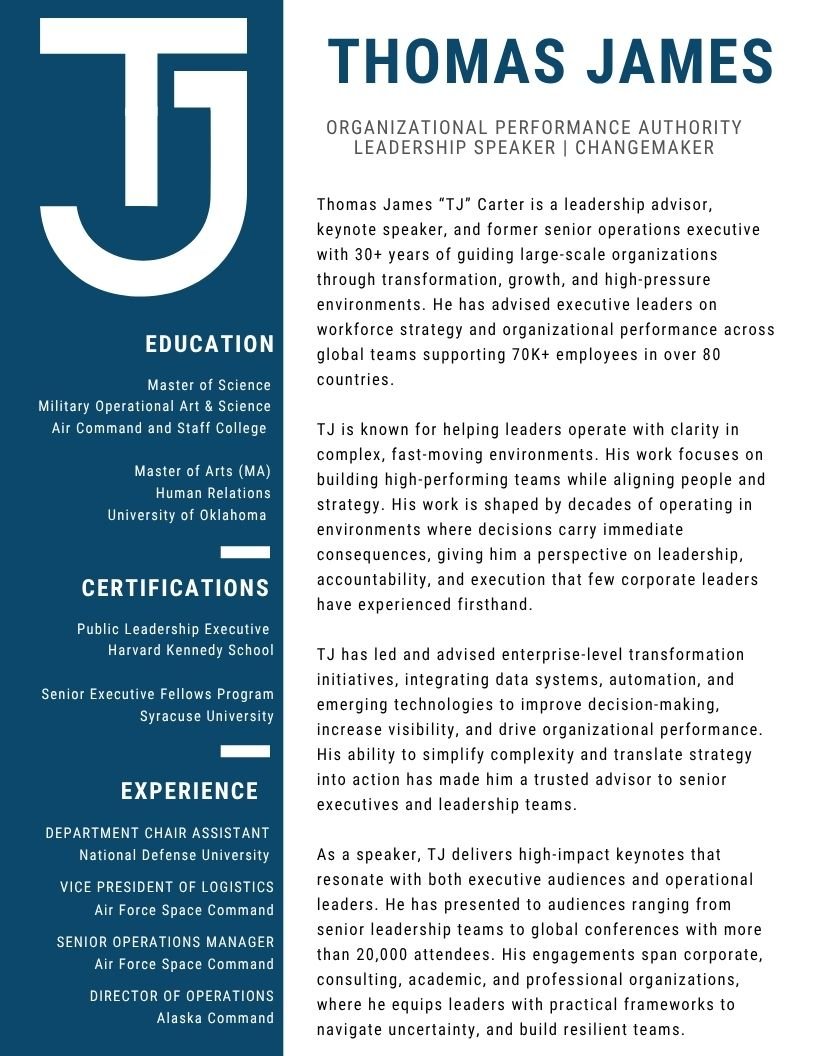
An executive bio, also called an executive biography or professional executive bio, is a narrative summary of your leadership experience, accomplishments, expertise, and professional reputation.
Unlike a traditional résumé, which emphasizes career history and qualifications, an executive bio tells the story of who you are as a leader.
A strong executive biography highlights:
- Leadership expertise and professional background
- Significant accomplishments and business impact
- Industries and organizations you’ve influenced
- Board memberships, advisory positions, and speaking engagements
- Your unique leadership value and professional brand
The purpose isn't simply to summarize your career.
It's to position you as a credible, accomplished leader worth knowing.
Executive Bio vs. Résumé: What’s the Difference?
Although executive résumés and executive biographies share some information, they serve different purposes.
Executive Résumé
An executive résumé is typically used when pursuing a specific leadership position.
It focuses on your qualifications, professional experience, and measurable accomplishments.
An effective executive résumé highlights your career progression, leadership responsibilities, organizational scope, and business results.
Executive Biography
An executive bio provides a broader picture of your professional identity.
Rather than listing positions chronologically, it connects your experience, achievements, and expertise into a compelling leadership narrative.
Executive bios are commonly used for:
- Corporate board introductions and appointments
- Conference speaking engagements
- Advisory and consulting opportunities
- Executive leadership profiles
- Professional association memberships
- Company websites and media appearances
Your executive résumé demonstrates what you’ve accomplished.
Your executive biography helps others understand who you are, what you’re known for, and why your leadership matters.
When Do You Need a Professional Executive Bio?
You don’t have to be a Fortune 100 executive to benefit from having a professional biography.
If you’re moving into senior leadership or building your professional reputation, an executive bio can help you prepare for opportunities that may arise unexpectedly.
1. Corporate Board Opportunities
Board candidates often need a concise professional biography highlighting their leadership expertise, governance experience, industry knowledge, and strategic contributions.
2. Speaking Engagements
Conference organizers frequently request speaker biographies for event websites, programs, and promotional materials.
3. Executive Networking and Introductions
When someone recommends you for a leadership opportunity, your executive bio can provide a polished introduction that communicates your professional value.
4. Advisory and Consulting Roles
Organizations considering you for advisory or consulting opportunities want to understand your expertise, accomplishments, and the perspective you bring.
5. Executive Personal Branding
Your professional biography helps create a consistent leadership narrative across your LinkedIn profile, company website, professional affiliations, and other career branding materials.
What Should an Executive Bio Include?
One of the biggest mistakes executives make is treating their bio like a résumé written in paragraph form.
A compelling executive biography should go beyond job titles and responsibilities.
It should answer several important questions:
- What are you known for professionally?
- What leadership challenges have you successfully navigated?
- What measurable impact have you made?
- What industries or areas of expertise distinguish you?
- What makes your perspective valuable to organizations?
Your executive bio should communicate your accomplishments while telling a cohesive story about your leadership.
Depending on its purpose, you may need a short executive bio for speaking engagements and a longer version for board opportunities, professional introductions, or company websites.
Why Executive Personal Branding Matters
Your executive bio is only one piece of your professional brand.
Your résumé, LinkedIn profile, and executive biography should work together to communicate a consistent message about your experience, accomplishments, and leadership value.
When these documents tell different stories, your professional brand can become confusing.
When they work together, they reinforce your credibility and help position you for the opportunities you want to pursue.
That’s why I include a professionally written executive biography in my comprehensive executive branding package at Career Confidence Resumes.
Senior leaders need more than a polished résumé. They need professional branding materials that reflect the level they’ve reached and the opportunities they’re pursuing.
Frequently Asked Questions About Executive Bios
How long should an executive bio be?
The ideal length depends on its purpose. A short executive bio may be 100–150 words, while a more comprehensive executive biography may run 300–500 words or longer. The goal is to communicate your value without overwhelming the reader.
Should an executive bio be written in first or third person?
Executive bios are commonly written in third person, particularly for company websites, conference programs, and board introductions. First person may be appropriate for more personal branding contexts.
Do I still need a résumé if I have an executive bio?
Yes. Executive résumés and biographies serve different purposes. Your résumé remains important for formal leadership searches, while your executive bio supports introductions, networking, speaking engagements, and professional visibility.
Can I use my LinkedIn About section as my executive bio?
Your LinkedIn About section can provide a starting point, but it may not be appropriate for every professional situation. A dedicated executive biography is typically written in a format that can be shared independently.
Is Your Executive Bio Ready for Your Next Opportunity?
If you don’t have an executive bio, or your current one doesn’t reflect the leader you’ve become, it may be time for an update.
At Career Confidence Resumes, I help executives communicate their experience, accomplishments, and leadership value through professionally written career branding materials.
Whether you’re pursuing a C-suite position, preparing for board opportunities, or strengthening your professional presence, your executive bio should reflect where you are today and where you want to go next.
Contact Career Confidence Resumes to learn more about executive biography writing and comprehensive executive branding services.
Because at a certain level, you’re not always submitting applications.
You’re being introduced.